Engineered by Nature.
Refined for Industry.
Transforming agricultural coconut husk into high-density protective packaging, civil geotextiles, and organic horticultural substrates. Zero petrochemical resins, zero microplastics.

Highest terrestrial rot & moisture immunity
Home compostable into fertile organic humus
Stabilizes soil until native vegetation roots
100% bio-based, zero microplastic shedding
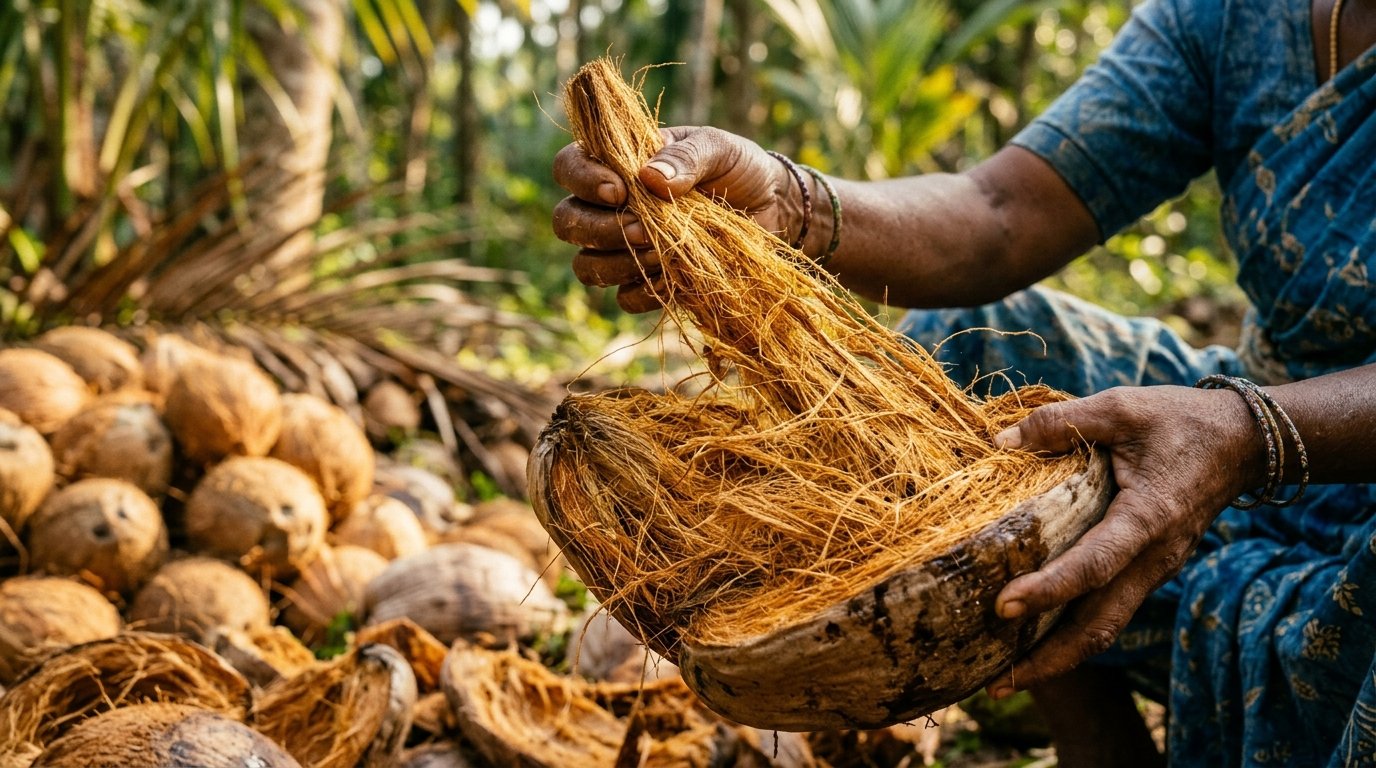
Rescuing millions of agricultural coconut husks from coastal smallholder farming cooperatives that were historically burned in open fields.
The Miracle of the Coconut Husk.
Before synthetic shock absorbers or petroleum foams existed, nature spent 60 million years engineering the coconut husk: a fibrous, impact-damping armor built to survive 30-meter canopy falls and saltwater ocean crossings.
Exocarp · Outer Weather Barrier
Waxy, impermeable skin shielding the fruit against tropical UV, monsoons, and saline ocean spray.
Fibrous Mesocarp · Coir Fiber Core
Dense matrix of high-lignin spring-coiled fibers delivering exceptional kinetic drop damping and tensile tenacity.
Coir Pith · Natural Sponge Matrix
Microscopic cellular dust between fibers that absorbs 8x–10x dry weight in water, yielding fertile organic cocopeat.
45.8% Natural Lignin. Nature’s Spring Wire.
Fibers extracted from the coconut husk possess the highest natural lignin concentration of any terrestrial plant fiber (45.8%). Its cellular walls are microscopic spring spirals, delivering organic elasticity and rot resistance without chemical plasticizers.
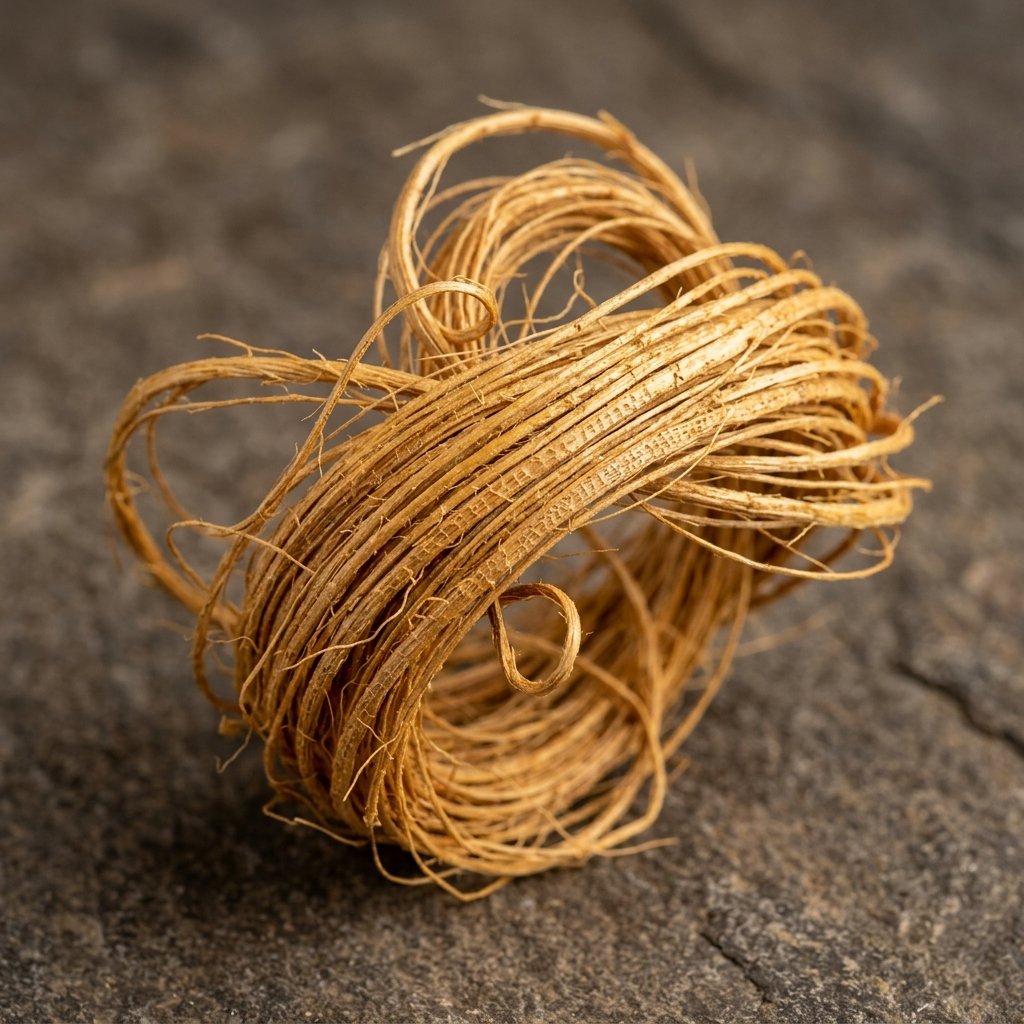
Naturally waterproof and rot-resistant, withstanding years of tropical humidity and torrential runoff.
Water. Air. Botanical Sap.
No toxic sulfur bleaches, no hazardous solvents, and zero petrochemical resins. We deconstruct the whole agricultural husk into structural fibers and horticultural peat through closed-loop mechanical mastery.
Closed-Loop Hydro Decortication
Rainwater soaking softens the dense husk mesocarp. Automated mechanical beaters cleanly tease apart long bristle fibers from spongy coir pith dust with zero caustic chemicals. 92% of water is biologically recirculated.
Clean Solar Curing
Natural open-air solar sunbeds dry both the husk fibers and coir pith down to a calibrated 12% moisture equilibrium, powered by 100% renewable coastal sun and husk-shell thermal gasifiers.
Latex Bonding & Pith Compacting
Husk fibers are thermo-bonded with tapped Hevea tree latex into shock-proof packaging, while pure coir pith dust is compacted under 50-ton hydraulic pressure into high-expansion cocopeat blocks.
Ending the 500-Year Microplastic Stain.
Conventional Styrofoam (EPS) and plastic erosion nets linger in soil and marine ecosystems for half a millennium, breaking down into toxic microplastics. Coir provides equal protection, then gracefully nourishes the earth.
- 100% Husk Valorization: Prevents field burning of 65B agricultural husks annually.
- 90 - 120 Days: Completely degrades in soil or home garden compost.
- Zero Microplastics: Leaves 100% organic carbon, potassium, and humus.
- Protects Peat Bogs: Cocopeat replaces destructive wetland peat moss mining.
Under standard home composting conditions, molded shells disintegrate harmlessly into organic fertilizer.
Net carbon savings per kg when substituting expanded polystyrene packaging with molded coconut fiber.
Woven geotextile blankets hold topsoil on 45° slopes during monsoon torrents while roots establish.
Fibers store moisture during dry spells, feeding grass seedlings and accelerating slope stabilization.
Three Manifestations of the Upcycled Husk.
Every anatomical layer of the coconut husk is transformed: shock-absorbing fiber packaging, high-tensile civil geotextiles, and moisture-retentive cocopeat growing media.
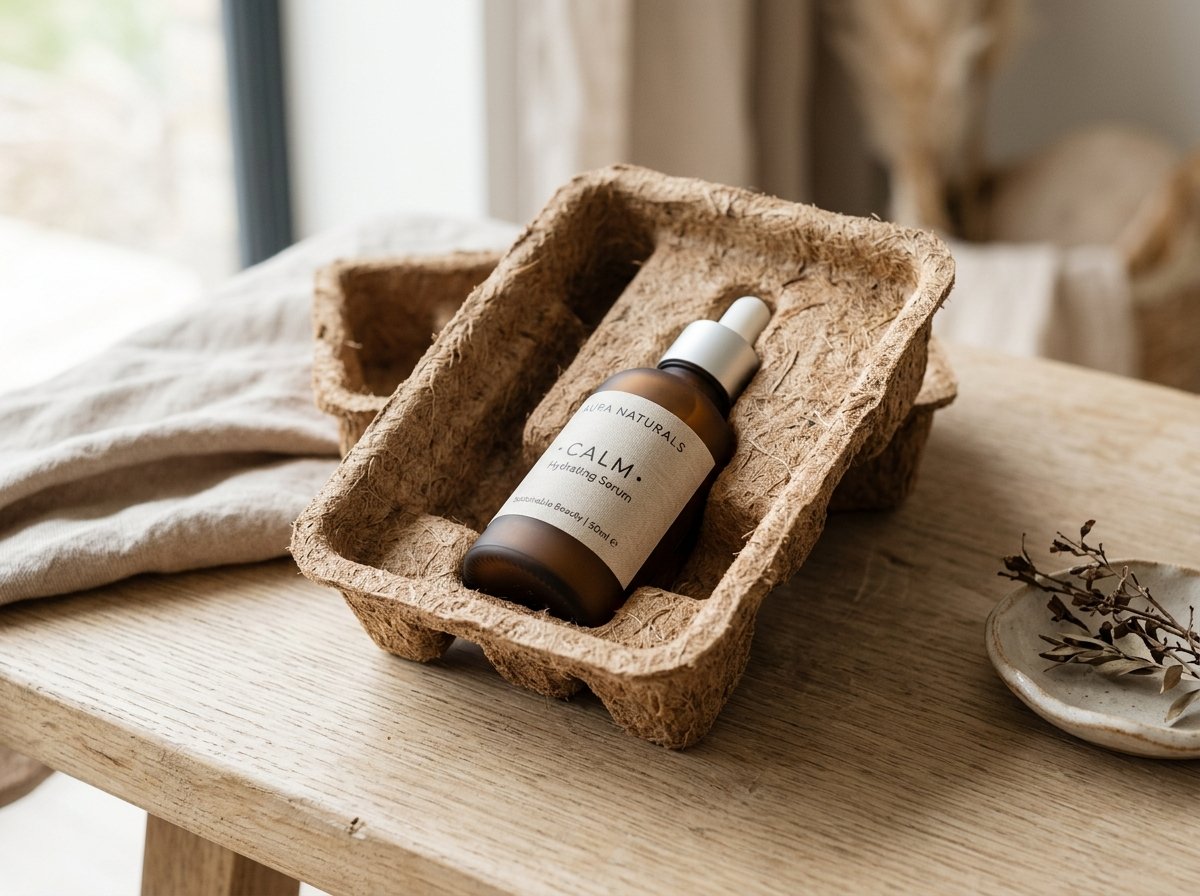
Molded Protective Packaging
Drop-tested to ISTA 3A criteria. Designed from resilient husk mattress fibers bonded with natural Hevea tree sap for consumer electronics, cosmetics, and cold-chain freight.
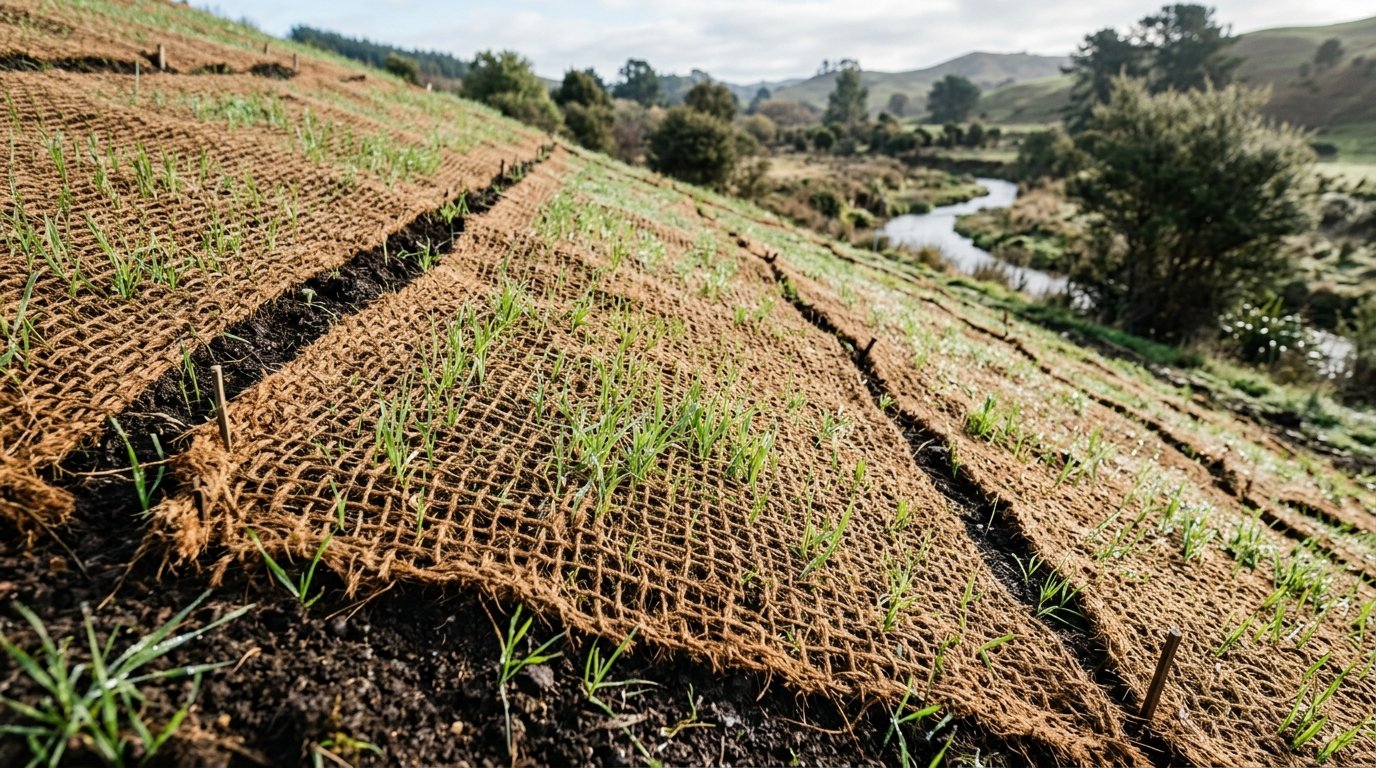
Woven Geotextiles & Sediment Logs
High-tensile natural open-mesh netting spun from long bristle husk fibers. Stabilizes steep road embankments and waterways for 3 to 5 years until roots anchor the soil.
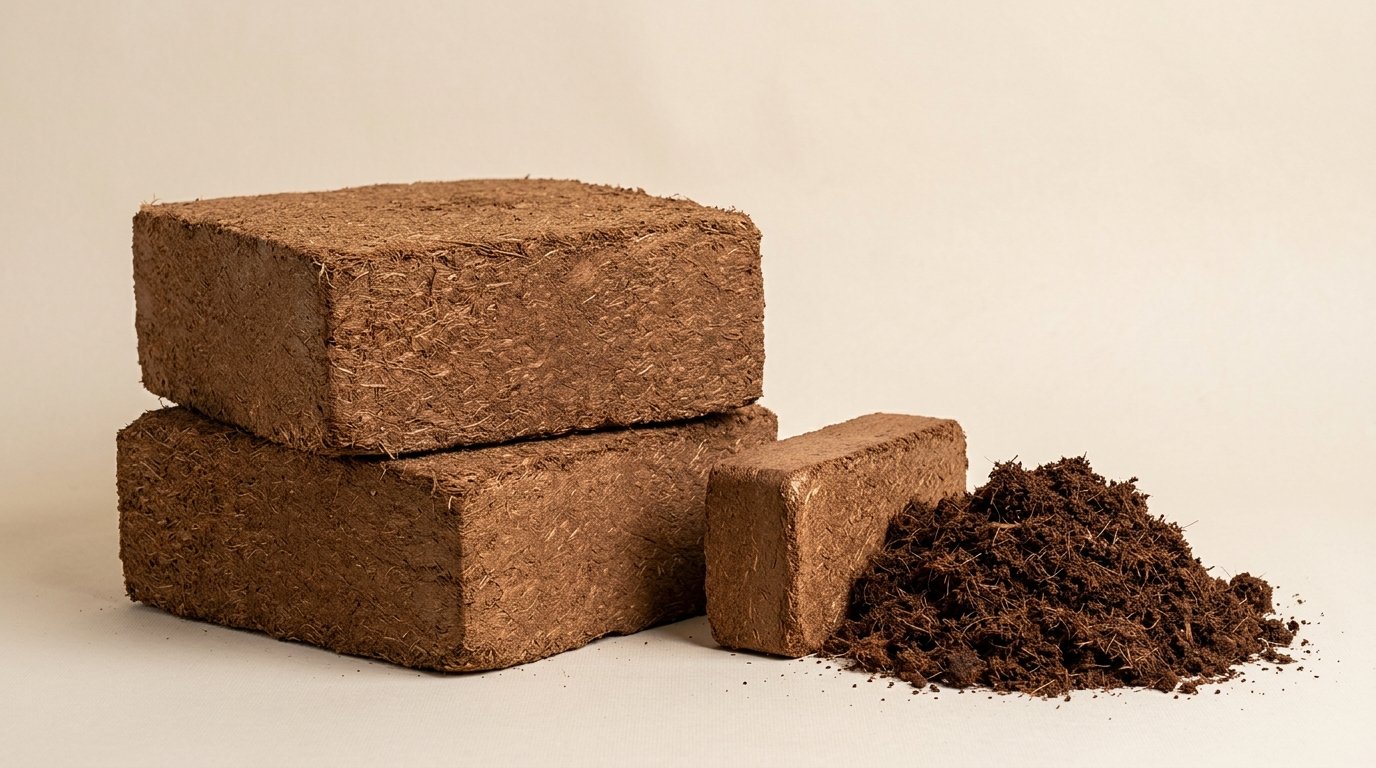
Compressed Cocopeat Blocks
Triple-washed organic substrate blocks hydraulically compressed from cellular husk pith dust. Expands 5:1 with optimal air porosity, replacing mined peat moss and rockwool.
Specialized Engineering & Research Modules
Access individual technical departments, run quantitative LCA calculations, or inspect ASTM laboratory benchmarks.
Experience the Material First-Hand
Request our R&D Material Kit containing molded coir protective geometry swatches, high-tensile geotextile weave samples, and accredited lab test sheets.